

No products in the cart.

How to Tell Real vs. Fake Carbon Fiber
Knowing how to tell real vs fake carbon fiber matters most when the aftermarket motorcycle industry is flooded with counterfeit materials. When you are upgrading a $25,000 superbike, bolting on fake carbon fiber is not just an aesthetic downgrade—it is an insult to the engineering of the machine.
Unfortunately, manufacturing techniques for counterfeit carbon fiber have become highly deceptive. Many retailers sell “carbon fiber style” ABS plastics or low-cost fiberglass laminates disguised as premium composites.
If you want to ensure your motorcycle is equipped with genuine, aerospace-grade material, you must understand the physical and structural differences between real 100% pre-preg dry carbon and low-cost imitations. This guide provides the hardcore technical tests to identify authentic carbon fiber.
Quick Reference: Real vs. Fake Carbon Fiber Matrix
| Material Type | Manufacturing Process | The Backside Look | 3D Depth / Light Reflection | Structural Rigidity |
|---|---|---|---|---|
| Real Dry Carbon (Pre-preg) | Autoclave cured under high heat and pressure. | Raw carbon weave matrix or Kevlar reinforcement. | Deep, shifting 3D depth. | Very rigid with little flex. |
| Fiberglass-Backed | One layer of wet carbon laid over fiberglass. | White or yellowish rough fiberglass strands. | Moderate, often clouded by heavy wet resin. | Heavier, more prone to cracking under stress. |
| Hydro-Dipped (Fake) | Water transfer printing over ABS plastic. | White or black molded ABS plastic. | Flat, 2D printed look with no depth. | Flimsy, bends easily, heavy. |
| Vinyl Wrap (Fake) | Adhesive stickers applied to plastic. | Original plastic or metal color. | Artificial texture, feels like rubber or plastic. | Offers no structural benefit. |
1. The Holographic Light Test

The Science: Genuine carbon fiber is woven from thousands of microscopic carbon filaments (tows). Because these tows overlap in an over/under pattern (like plain or twill weaves), they reflect light at different angles. When you move a real carbon fiber part under direct sunlight, the weave shows a deep, shifting 3D effect.
The Fake: Hydro-dipped plastics (water transfer printing) and carbon-look vinyl wraps are merely 2D images printed onto a flat surface. No matter how you angle the part in the light, the pattern stays flat and lifeless. If the weave looks like a photograph rather than an interwoven fabric, it is fake.
2. The Backside Inspection
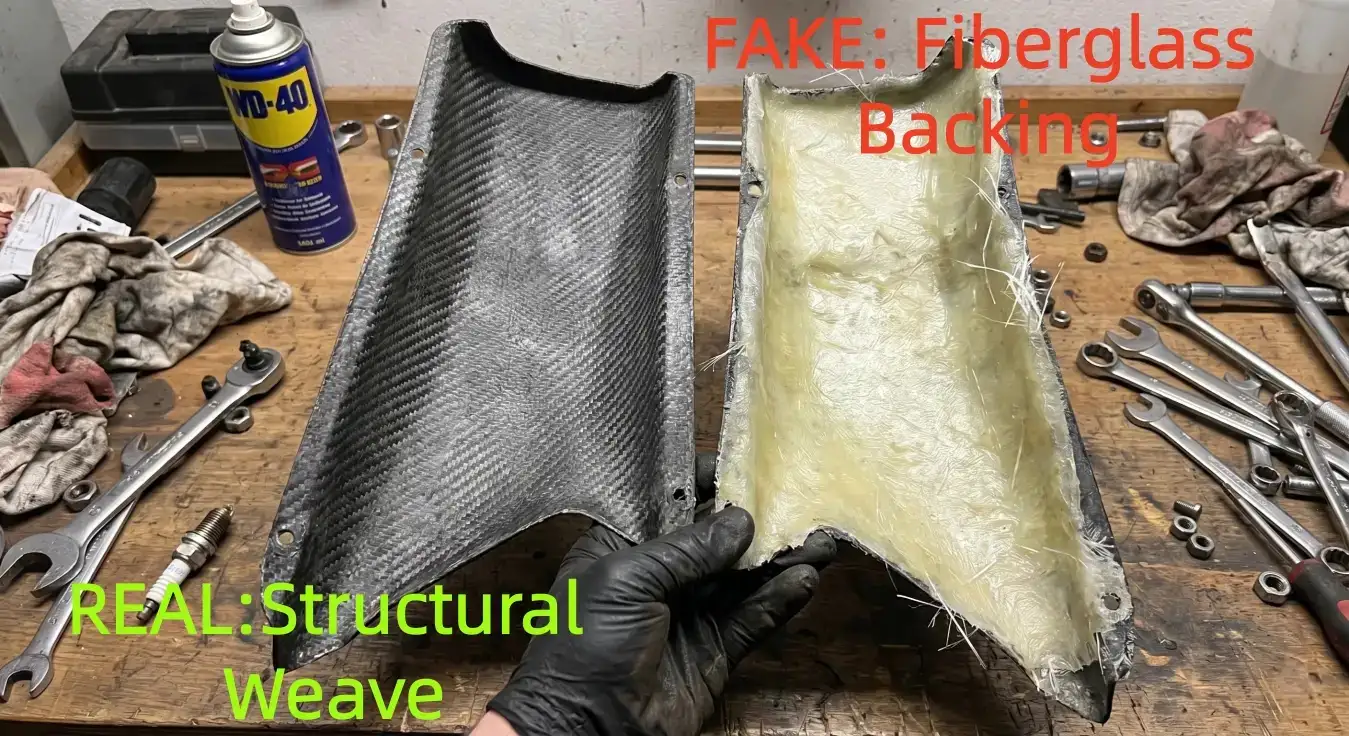
The Science: The easiest and most definitive way to expose fake carbon fiber is to turn the part over and look at the unpainted backside. A genuine 100% dry carbon fiber piece, like those manufactured by AK Carbon, shows the raw structural carbon matrix or a specialized Kevlar reinforcement layer on the inside.
The Fake: If you flip the part over and see smooth white or black ABS plastic, it is hydro-dipped fake carbon. If instead you see jagged white or yellow strands, you have a fiberglass-backed part. Some retailers lay a single cosmetic layer of wet carbon over fiberglass to cut cost, which leads buyers to think they bought full carbon fiber.
3. The Weight and Rigidity Test
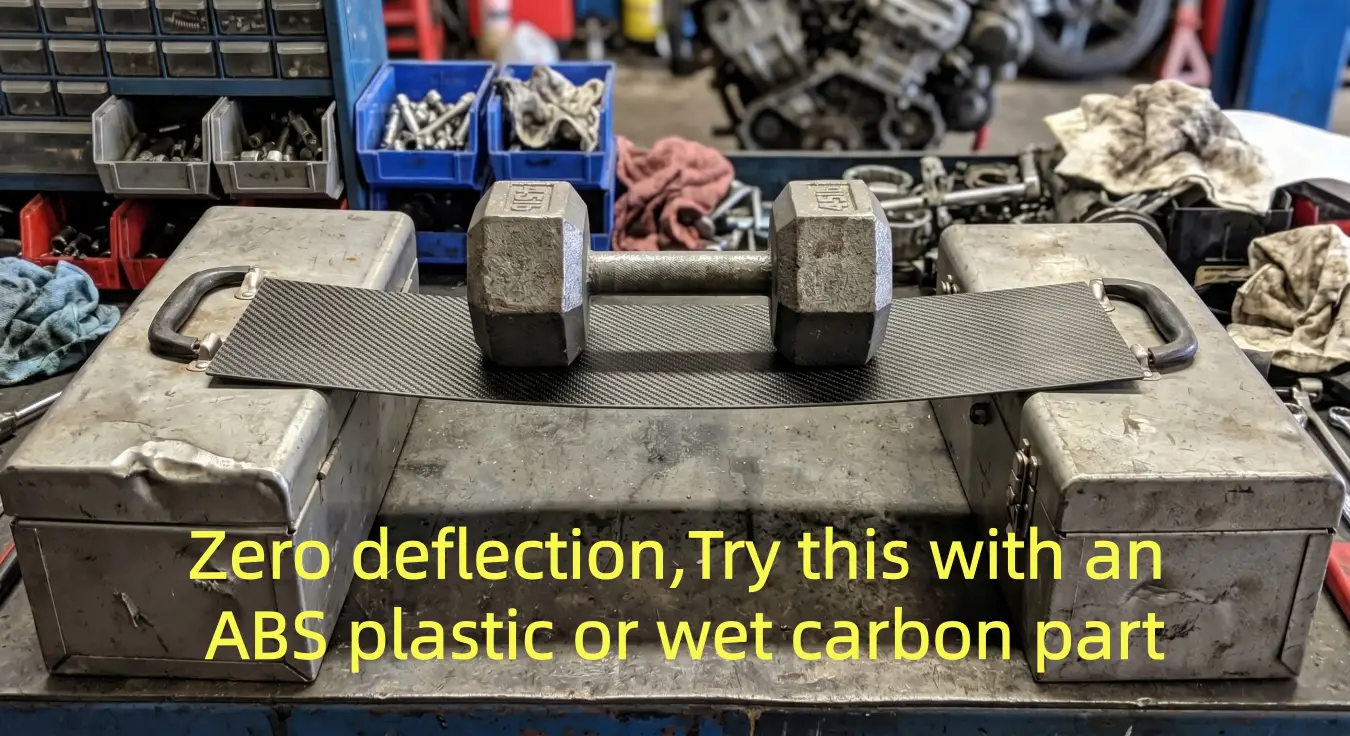
The Science: Carbon fiber was developed for Formula 1 and aerospace applications for its high strength-to-weight ratio. A true pre-preg dry carbon fairing feels notably light in your hands. Despite the low weight, if you try to twist or bend the part, it offers strong resistance and stays rigid.
The Fake: ABS plastic and fiberglass are noticeably heavier. If the part feels heavy, or if you can easily twist and flex it with your bare hands, it does not contain structural carbon fiber.
4. The Thermal Resistance (Fire Test)

Safety note: this is a destructive test. Only try it on a scrap sample you do not intend to return or install, in a ventilated area with proper precautions.
The Science: Carbon fibers are highly heat resistant. Under a brief flame the epoxy resin coating may singe or blister, but the interwoven carbon fibers themselves hold together rather than melting away.
The Fake: Vinyl wraps shrivel and melt within seconds of heat. Hydro-dipped ABS plastic warps, melts, and releases dark smoke. Real carbon fiber keeps its shape under high heat, which is why it is used for motorcycle exhaust heat shields.
Real vs Fake Carbon Fiber: Frequently Asked Questions
Is fiberglass with a carbon layer considered real carbon fiber?
The top layer is real carbon, but structurally it is a compromise. This is known in the industry as wet carbon over fiberglass. It is heavier than 100% dry carbon and more prone to cracking and yellowing. AK Carbon uses 100% pre-preg carbon fiber rather than a fiberglass-backed layup.
How can I tell if a motorcycle part is hydro-dipped?
Look at the edges and the backside. Hydro-dipping is a surface-level print, so the pattern often stretches or distorts around sharp corners, and the backside reveals the raw plastic base material, usually white or black. It also lacks the shifting 3D depth of a real weave under sunlight.
Why is real dry carbon fiber more expensive than fakes?
Authentic dry carbon requires pre-impregnated raw materials, CNC molds, and curing inside a high-pressure autoclave. You are paying for real weight reduction, high rigidity, and a finish that resists fading and yellowing over time, none of which hydro-dipped or vinyl-wrapped parts provide.
Upgrade your motorcycle with 100% authentic, autoclave-cured dry carbon fiber from AK Carbon


About author

Related posts

It’s lap nine at Laguna Seca, ambient temps pushing 95°F, and the fairing panel by your knee has just started to flex under braking. Somewhere... Continue reading
Add comment