

No products in the cart.

Bottlenecked by Bolt-On Plastic: The Engineering Case for BMW M1000RR Dry Carbon Fiber
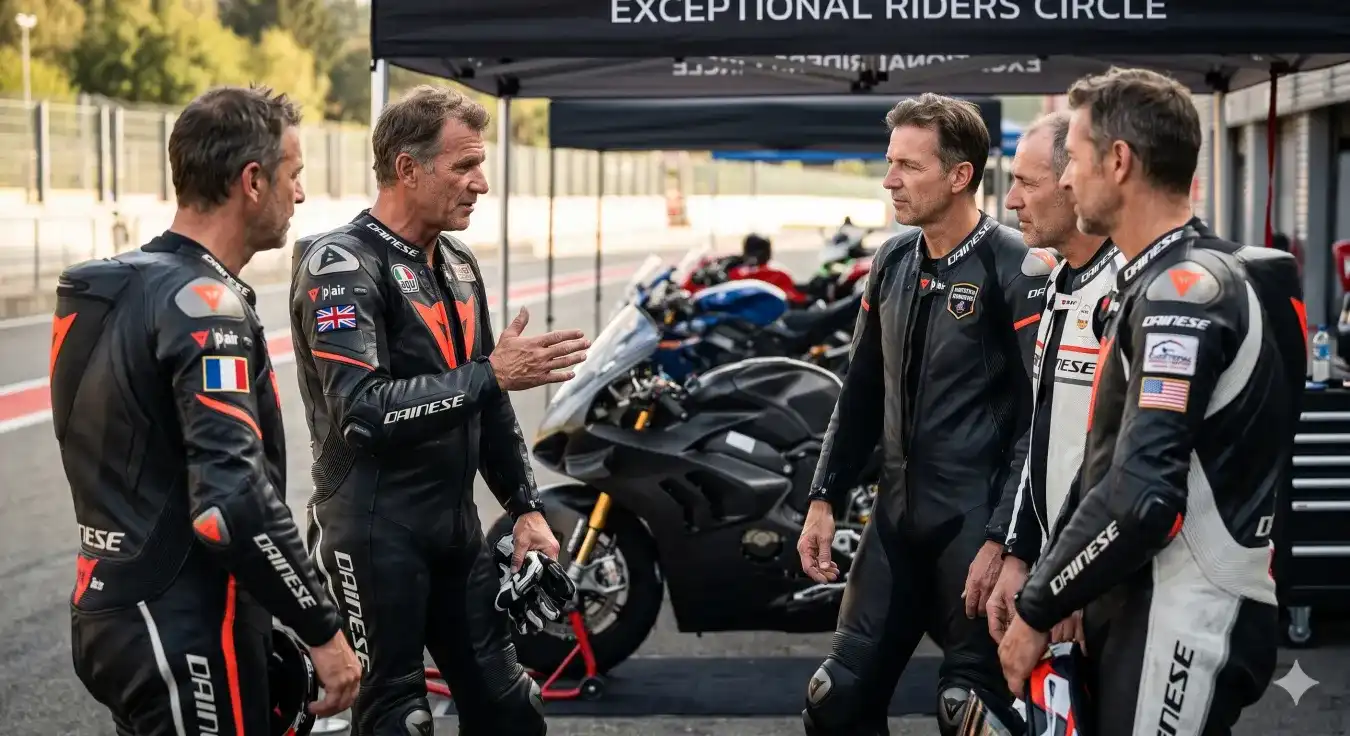
You roll into the paddock on an M1000RR that cost more than most cars, engine still ticking as it cools. A rider two bikes over glances at your fairing’s bolt line, says nothing, and looks away. Misaligned holes and a slightly proud panel edge take about three seconds to spot on a grid full of people who know the difference.
That three-second read is really a resin-content problem. Here’s what actually changes underneath the bodywork when you move from wet carbon or stock plastic to autoclave-cured BMW M1000RR dry carbon fiber — and why the fitment detail most riders never think about is the part that matters most.
The Short Answer
For a BMW M1000RR, autoclave-cured dry carbon fiber trims meaningful weight off the factory ABS bodywork while holding its shape and finish under sustained engine and exhaust heat. What separates a great panel from a disappointing one is the manufacturing method: genuine autoclave dry carbon with a low, controlled resin content (near 40 percent) that is molded to OEM mounting points, not resin-heavy wet lay-up that shrinks unevenly and needs trimming to fit.
The Science of Carbon: Weight, Strength, and Where It Matters on the M1000RR
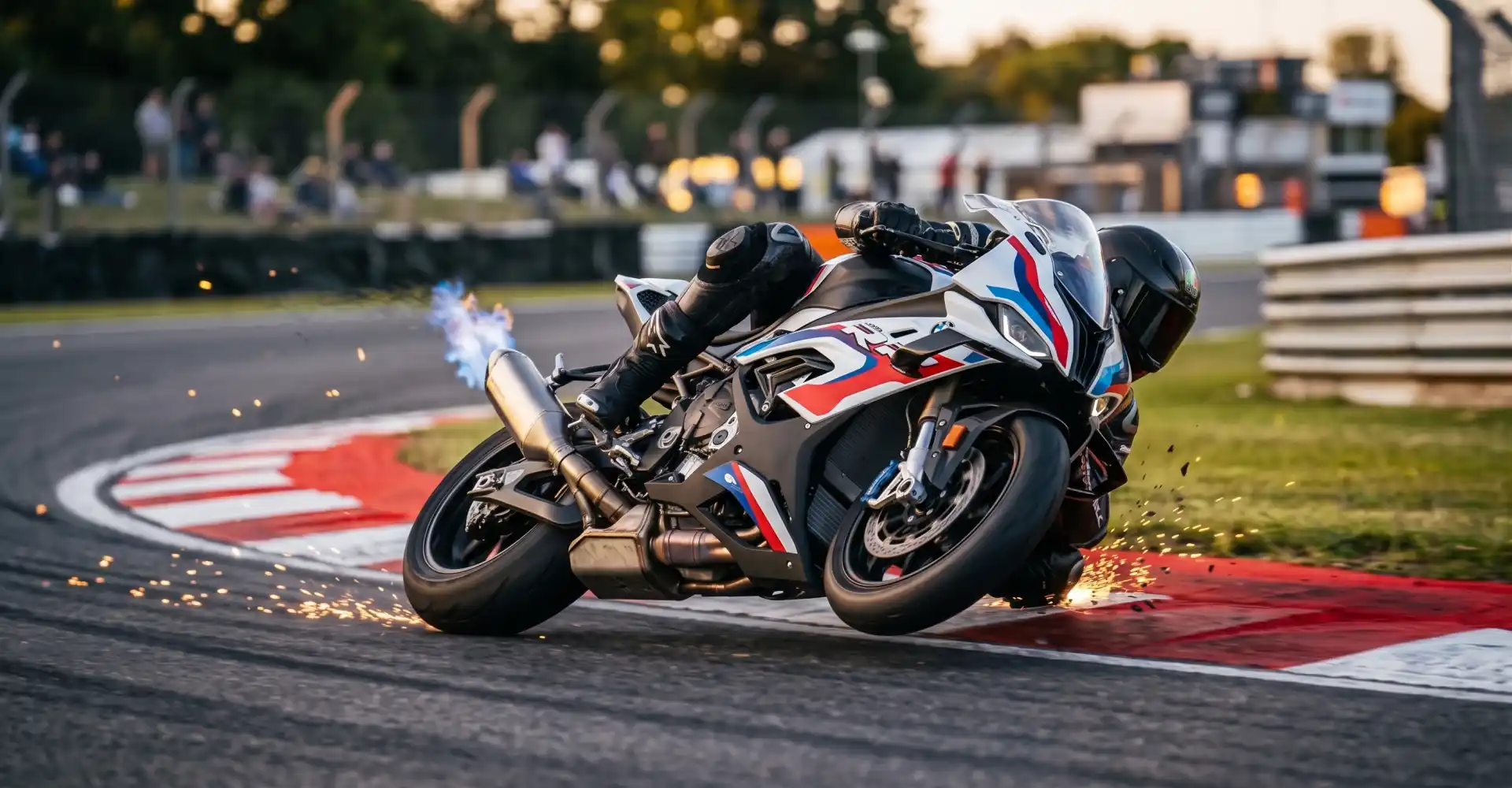
Engineers spend real time in wind tunnels to shave a single kilogram off a chassis. Swapping to autoclave-cured dry carbon removes weight the same way — through a controlled resin ratio, not a thinner panel. For the full breakdown of how resin content and cure method separate real dry carbon from wet lay-up, see our material science comparison.
| Property | OEM Plastic | Wet Carbon | AK Carbon Dry Carbon |
|---|---|---|---|
| Finish and edge durability | Scratches and cracks with handling | Resin-rich edges prone to chipping | Hard clear-coated surface that holds up to regular handling |
| Resin content by weight | Not applicable | Higher, less consistent | Low, controlled (~40%) |
| Mounting tolerance | Wide factory tolerance | Shrinks unevenly, often needs modification | Molded to OEM mounting points for a no-modification fit |
| Weight (full fairing set) | Baseline | Marginal savings (excess resin adds mass back) | Several kilograms lighter than OEM ABS bodywork |
The durability row is the one riders underestimate. Track-day life is full of small knocks — a glove, a paddock stand, a careless neighbor in the pits — and a controlled-resin autoclave panel with a proper clear coat handles that day-to-day contact better than resin-heavy wet lay-up, which tends to chip at the edges. This is about keeping the finish you paid for looking right season after season. It is not crash protection, and no bodywork should be sold as if it were.
Precision & Fitment: What the Tolerance Actually Looks Like
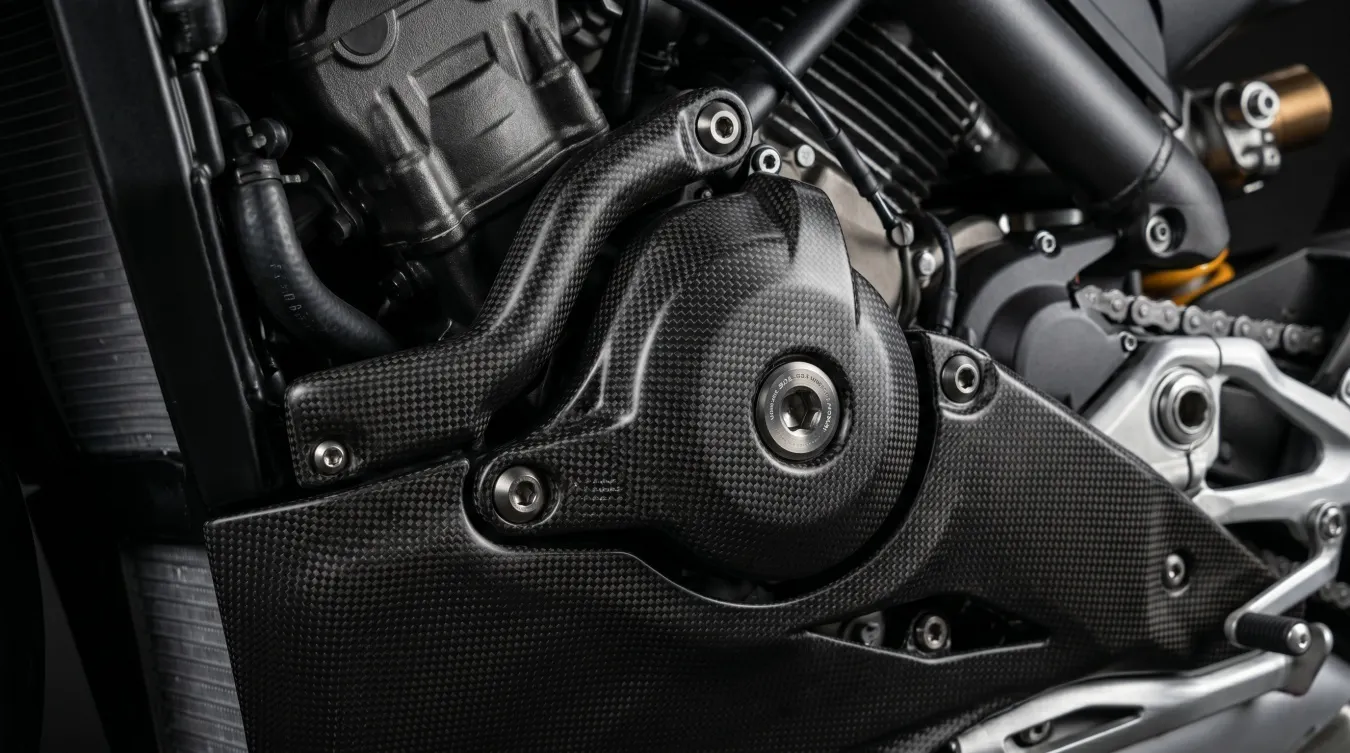
Ambient-cure wet carbon shrinks unevenly as it sets, which is why it so often needs a Dremel or zip-ties to actually seat against OEM mounting points. Autoclave curing under controlled pressure is what prevents that shrinkage in the first place.
Every panel is molded to the reference points it was cured against, which is what makes fitment something you can check rather than take on faith. That is the kind of alignment you can actually see on the M1000RR fitment photos — panel gaps that line up before a single fastener is torqued.
Pro Tips for Installation
- Torque discipline over brute force — a general 4-6 Nm range is common practice for carbon composite fasteners; always confirm against your specific fairing kit’s spec sheet before final torque.
- Dry-fit before final torque — set every panel by hand first and check gaps across the full fairing set before committing to torque spec.
- Inspect after any tip-over — check panels for hairline cracks near mounting points before the next session, not just visually from a distance.
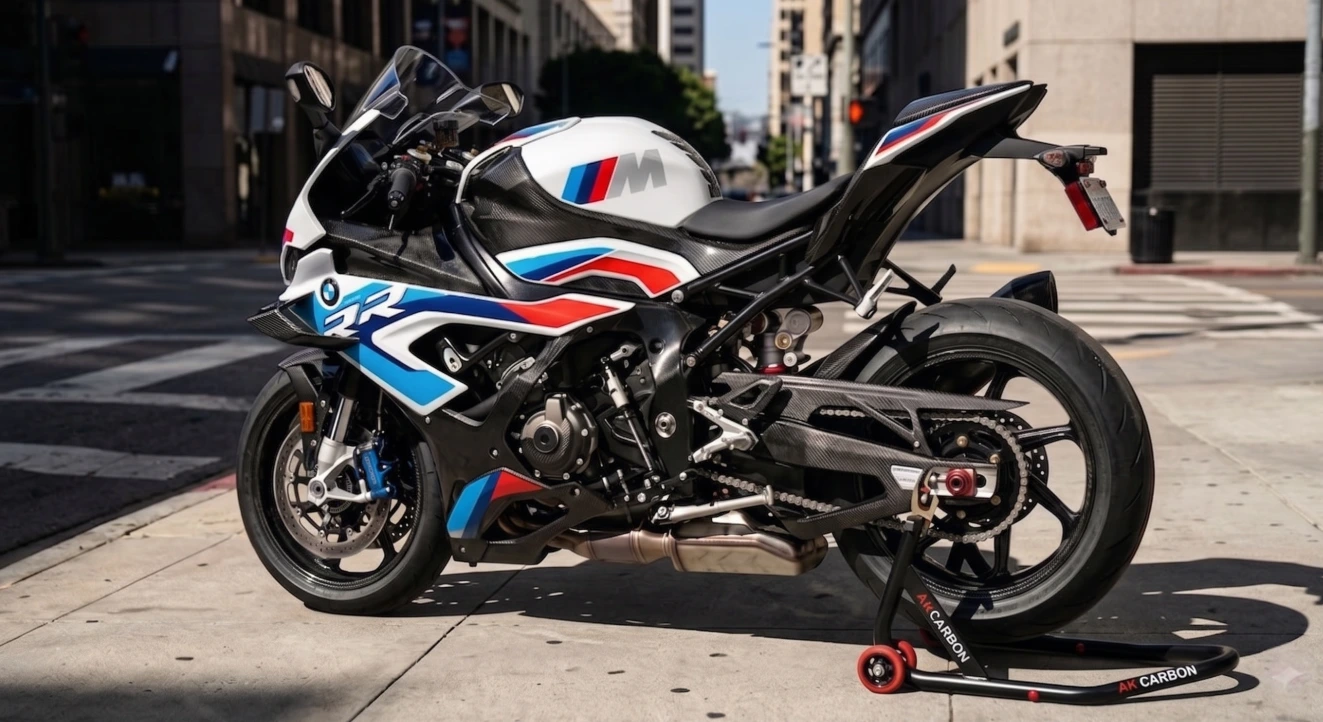
For riders comparing platforms beyond the M1000RR, the full BMW track-focused carbon program covers the rest of the lineup under the same autoclave standard.
Frequently Asked Questions
Does removing weight from the fairings affect the M1000RR’s stock suspension setup?
For fairing and bodywork panels, no recalibration is typically required, since the weight involved is modest relative to sprung mass. Components closer to the wheels, like carbon wheel covers, are more likely to warrant a professional suspension review.
Do dry carbon panels and covers add any crash protection?
Not in the way armor does. Carbon bodywork is a finish and fitment part first. A quality autoclave panel is stiff and holds its shape, and it can shrug off minor handling contact better than thin plastic, but it reduces cosmetic damage rather than protecting the rider or the frame in a real impact. Outcomes in a slide still depend on speed and angle, so treat any protection as incidental.
What resin content does AK Carbon’s dry carbon actually run?
AK Carbon holds resin content near 40 percent through full autoclave curing under heat and pressure. That controlled, low ratio is what keeps the panels light and dimensionally stable, unlike resin-heavy wet lay-up that cures without that pressure and adds mass back.


About author

Related posts

It’s the third session of the day at a Southern California track day, ambient temperature climbing past 90°F, and the air coming off your S1000RR’s... Continue reading

The 2025 Panigale V4 arrived with redesigned aerodynamics and a switch from the iconic single-sided swingarm to a new double-sided design. It is a purpose-built... Continue reading
Add comment