
No products in the cart.
Motorcycle Carbon Fiber Weaves Explained: Twill vs. Plain vs. Forged
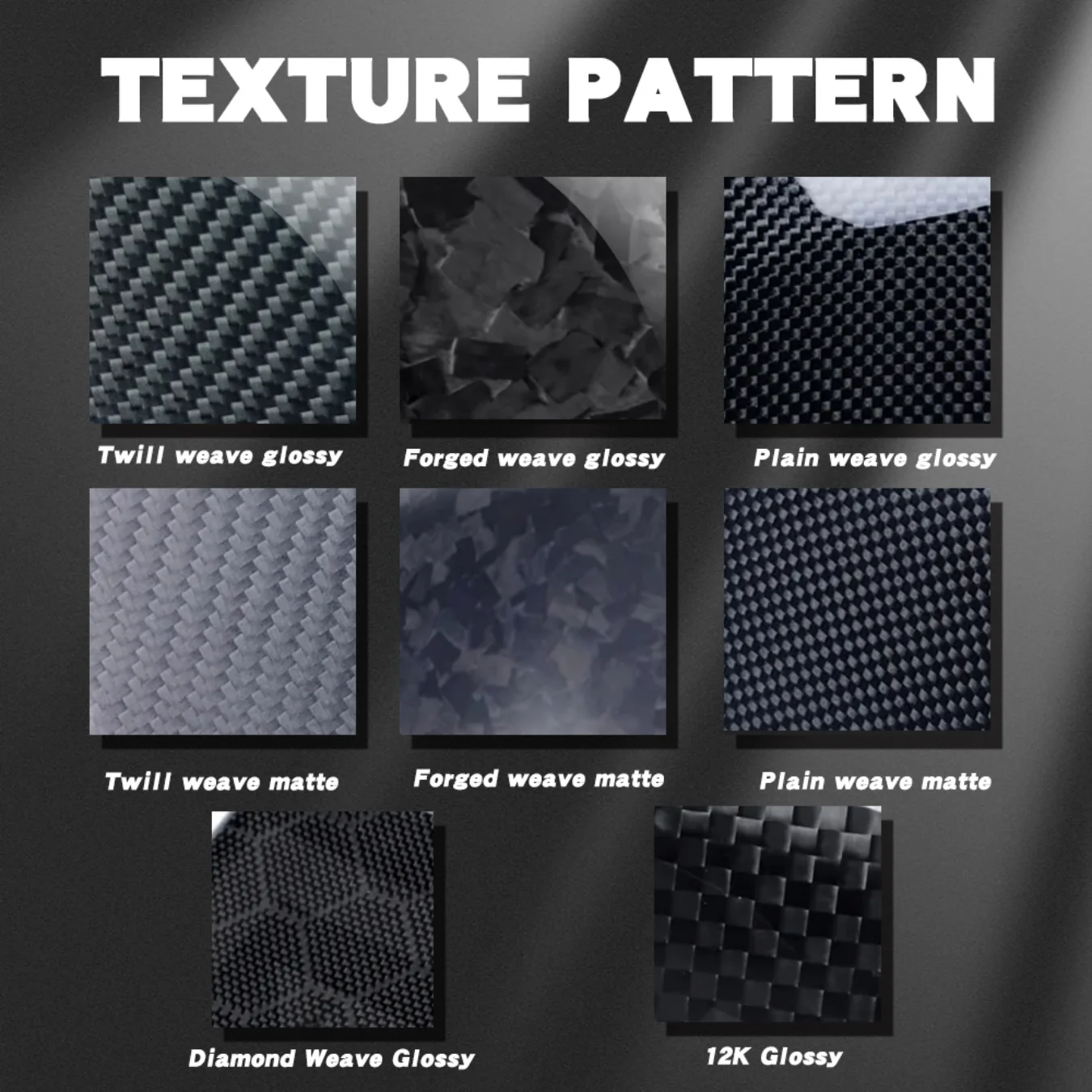
Carbon Fiber Patterns/Weaves
When upgrading a premium motorcycle with carbon fiber fairings, selecting the correct weave is not just a matter of subjective styling—it is an engineering and aesthetic commitment.
This guide breaks down the hardcore specs, visual identifiers, and correct applications for the three primary carbon fiber structures.
Quick Reference: Carbon Fiber Weave Matrix
| Weave Specification | Visual Pattern | 3D Depth | OEM / Brand Application Guide | Best Used For |
|---|---|---|---|---|
| Plain Weave (1×1) | Symmetrical Checkerboard | Low | Ducati, BMW, Aprilia | Matching elite European OEM factory carbon perfectly. |
| Twill Weave (2×2) | Diagonal Stripes | Extreme | Yamaha, Honda, Kawasaki, Suzuki, Triumph | Aggressive track builds, Japanese OEM matching (e.g., Yamaha R1M). |
| Forged Carbon | Chaotic Marbled Flakes | Unique | Universal Exotic Upgrade | Naked bikes (Streetfighter, Tuono, Z H2) & avant-garde hyperbike accents. |
1. What is Plain Weave (1×1) Carbon Fiber?
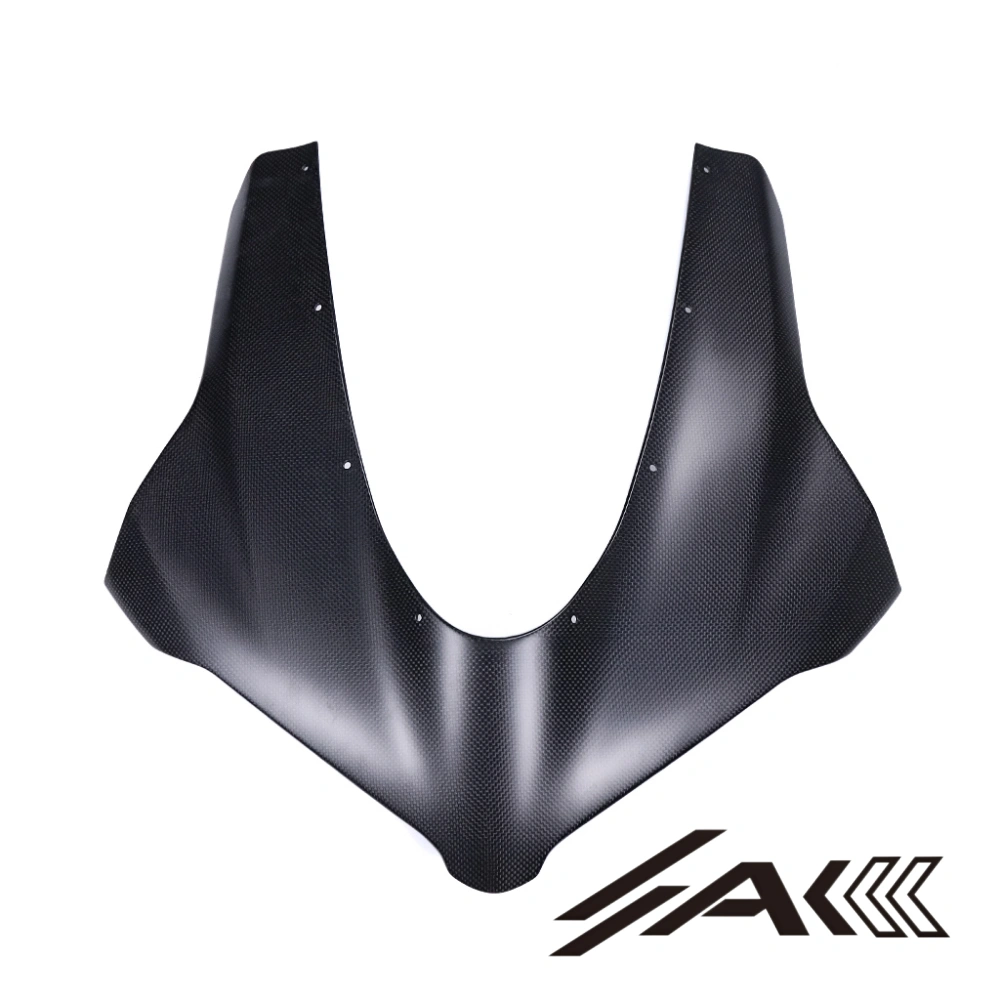
Matt
Glossy
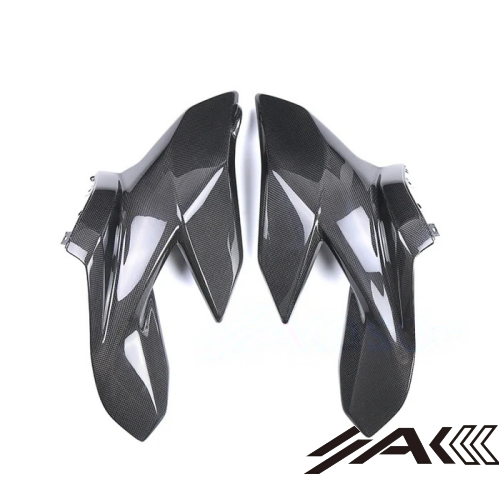
Definition & Structure: Plain weave, heavily recognized as the 1×1 weave, utilizes a strict “over-one, under-one” interlocking carbon tow structure. This creates a tight, highly symmetrical grid that resembles a checkerboard. Because the tows are tightly woven, the fabric maintains extreme dimensional stability during the autoclave process.
The Application (The European OEM Standard): Best for: DUCATI, BMW, APRILIA Plain weave is the undisputed OEM standard for elite European manufacturers. If you own an Aprilia RSV4 Factory, a BMW M1000RR, or a Ducati Panigale V4 SP2 that comes from the factory with existing carbon fiber components (like fenders, exhaust shields, or winglets), you must select Plain weave for your aftermarket upgrades. Choosing Twill for a BMW or Ducati will clash violently with your factory parts and ruin the bike’s visual pedigree. Plain weave is understated, compact, and brutally precise.
2. What is Twill Weave (2×2) Carbon Fiber?
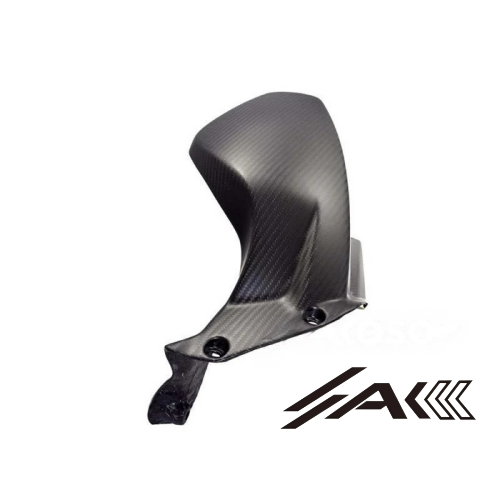
Matt
Glossy
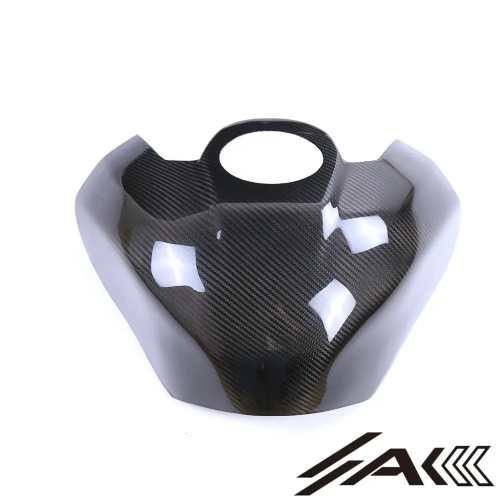
Definition & Structure: Twill weave, commonly referred to as 2×2, utilizes an “over-two, under-two” weaving pattern. This specific interlocking sequence creates the iconic, aggressive diagonal lines that most enthusiasts immediately associate with high-performance motorsports. Structurally, the looser weave allows the fabric to drape easily over complex, sharp aerodynamic shapes without wrinkling.
The Application (Japanese Dominance & Aggressive Aftermarket): Best for: YAMAHA, HONDA, KAWASAKI, SUZUKI, TRIUMPH Twill weave is the undisputed king of the high-end aftermarket and the preferred choice for Japanese flagship superbikes. For instance, the legendary Yamaha R1M utilizes Twill weave heavily from the factory. If you are doing a full-carbon transformation on a Honda CBR1000RR-R Fireblade, a Kawasaki Ninja ZX-10R, a Suzuki GSX-R1000R, or a Triumph Daytona, Twill is the definitive choice. Its looser structure allows light to penetrate deeper into the UV clear coat, creating an insane 3D holographic depth that gives inline-fours and triples a menacing, unapologetic track-ready appearance.
3. What is Forged Carbon Fiber?
Matt
Glossy
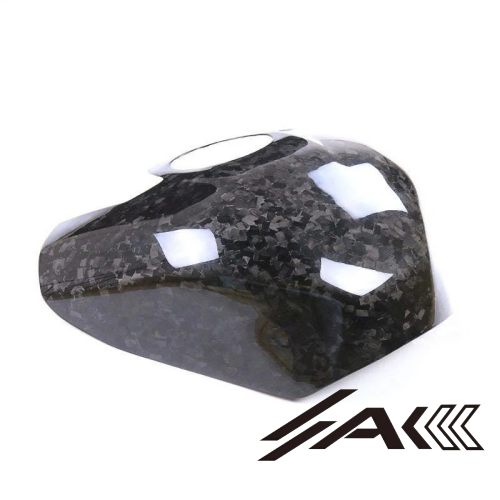
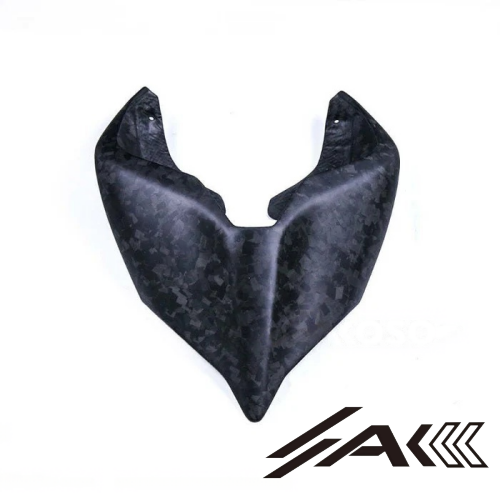
Definition & Structure: Unlike Plain and Twill, Forged Carbon does not use a continuous woven fabric. Instead, it utilizes “chopped tow”—thousands of small, loose carbon fiber flakes. These flakes are infused with a precise ratio of aerospace resin and then compressed inside a heated steel mold under massive Autoclave pressure. This creates an isotropic material (equal strength in all directions) and results in a completely random, marbled texture. Every single piece is mathematically unique
The Application (The Hyper-Exotic Flex): Best for: Universal / Naked Streetfighters (Streetfighter V4, Tuono V4, Z H2, MT-10) Pioneered by Lamborghini for their hypercars, Forged Carbon breaks away from traditional linear weaves and offers a chaotic, exotic aesthetic. While rarely used as a full-fairing OEM standard, it is the ultimate custom upgrade for exposed, aggressive components like winglets, tank covers, and frame guards. It is highly recommended for premium naked bikes where you want the components to stand out as bespoke, million-dollar hypercar-tier upgrades rather than standard racing parts
4. The Final Step: Matte vs. Glossy Clear Coat
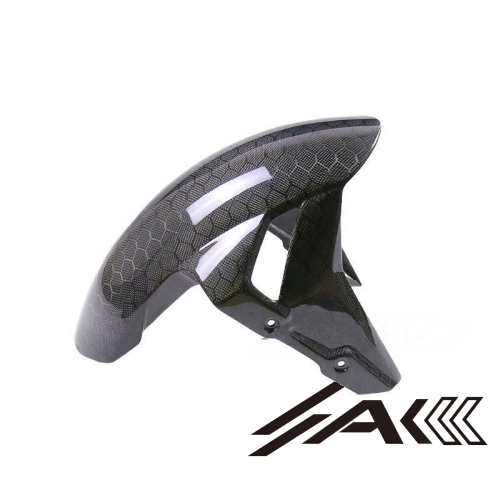
Once you have selected the correct weave to match your brand’s DNA, you must select the surface finish. At AKCARBON, we use a proprietary, UV-resistant aerospace clear coat that guarantees zero yellowing, available in two finishes:
- Glossy (High-Shine): Offers a “liquid glass” appearance. Glossy finishes maximize the 3D holographic depth of the carbon weave, making it pop aggressively under direct sunlight. Ideal for matching standard OEM clear coats on most Japanese models.
- Matte (Satin/Silk): Absorbs light, providing a stealthy, hyper-aggressive “factory race bike” aesthetic. Matte is the mandatory choice if you are trying to match the OEM dry carbon look found on modern Ducati Performance parts and BMW M Performance parts.
Frequently Asked Questions (FAQ)
Q: Is twill weave stronger than plain weave? A: In practical motorcycle fairing applications, the tensile strength difference between 1×1 plain and 2×2 twill is completely negligible. Both offer massive weight reduction and extreme rigidity. Your choice should be dictated entirely by aesthetic matching (Plain for European OEM, Twill for Japanese OEM/Aftermarket).
Q: Should I buy Plain or Twill for my BMW S1000RR? A: If your BMW S1000RR or M1000RR already has factory M Performance carbon fiber parts, you must select Plain weave. BMW traditionally uses Plain weave for their primary factory carbon. Matching it with AKCARBON Plain weave ensures absolute factory continuity.
Q: Can I mix plain and twill carbon fiber parts on my motorcycle? A: Technically yes, but aesthetically, it is a massive mistake. Mismatched weaves disrupt the visual harmony of the motorcycle and make a premium build look cheap and uncoordinated. Always identify the existing OEM carbon weave on your specific bike brand and commit to it entirely.
About author

Add comment